
Headaches and Neck-Related Head Pain
Headaches can have many causes. When the neck is contributing, understanding and addressing that connection can be an important part of getting better.

At Sure Start Chiropractic, we assess headache patterns carefully to determine whether problems involving the neck, muscles, joints or movement may be contributing to your symptoms.
Understanding Where Your Headaches May Be Coming From
Headaches are extremely common, but the reason they occur can vary considerably from person to person.
Sometimes the source is relatively straightforward. At other times, several factors may be contributing at once.
These can include:
- the joints and muscles of the neck
- prolonged or repetitive postures
- previous neck injury
- muscle tension
- stress and fatigue
- migraine-related processes
- sleep
- jaw problems
- medication or other health conditions
That’s why good headache care starts with working out what type of headache you are experiencing and what appears to be contributing to it.
The location of your headache doesn’t necessarily tell us where the problem is coming from.
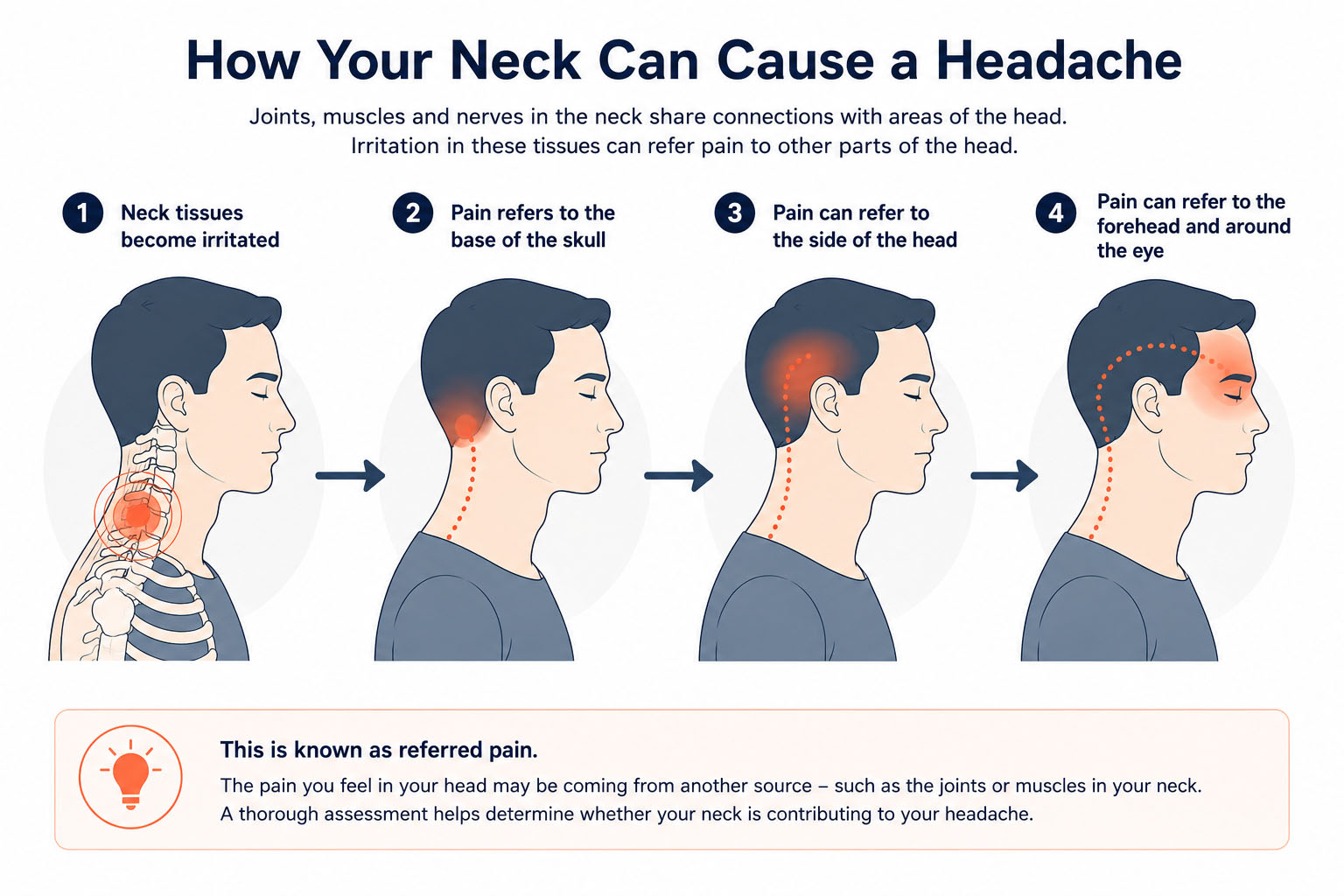
Structures in the upper neck can refer pain into the back, side or front of the head – and sometimes around the eye.
Common Types of Headaches We Assess
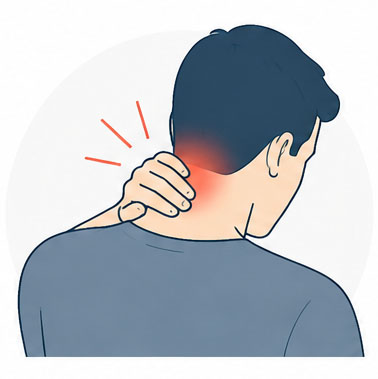
Neck-Related Headaches
Headaches associated with stiffness, pain or dysfunction involving the neck.
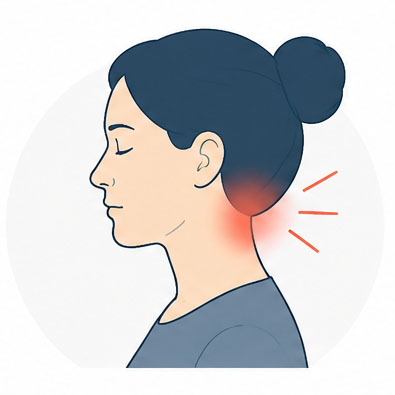
Headaches at the Base of the Skull
Pain beginning around the upper neck or base of the skull.
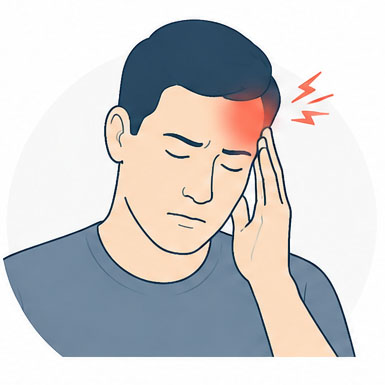
One-Sided Headaches
Headaches predominantly affecting one side of the head.
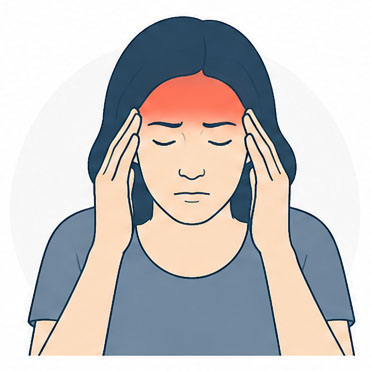
Tension-Type Headaches
Pressure, aching or tightness around the head.
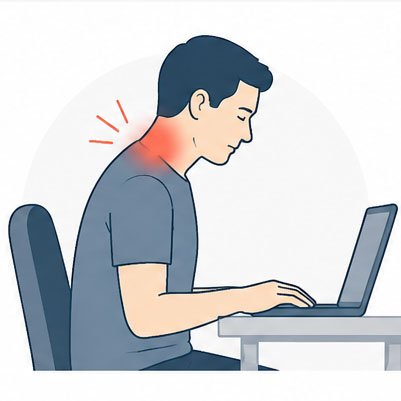
Headaches Associated With Posture
Symptoms that appear or worsen after prolonged sitting, computer work, driving or other sustained positions.
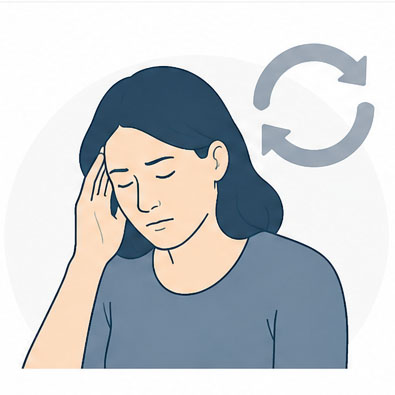
Recurring Headaches
Headaches that repeatedly settle and return.
How Can Your Neck Cause a Headache?
The upper part of your neck contains joints, muscles and nerves that share neurological connections with areas involved in sensation from the head and face.
Because of these connections, pain arising from structures in the neck can sometimes be felt as pain in the head.
This is known as referred pain.
For some people, irritation or sensitivity involving the upper cervical spine may contribute to headaches that:
- begin around the neck or base of the skull
- spread towards the temple, forehead or eye
- occur predominantly on one side
- are associated with neck stiffness
- worsen with particular neck movements or sustained postures
- occur alongside restricted neck movement
This doesn’t mean that every headache comes from the neck. The purpose of assessment is to determine whether the neck appears to be an important part of your particular headache pattern.
Why Do Some Headaches Keep Returning?
For some people, treatment helps and the headache settles – but eventually it comes back.
This can happen when the factors that made the area vulnerable in the first place have not completely changed.
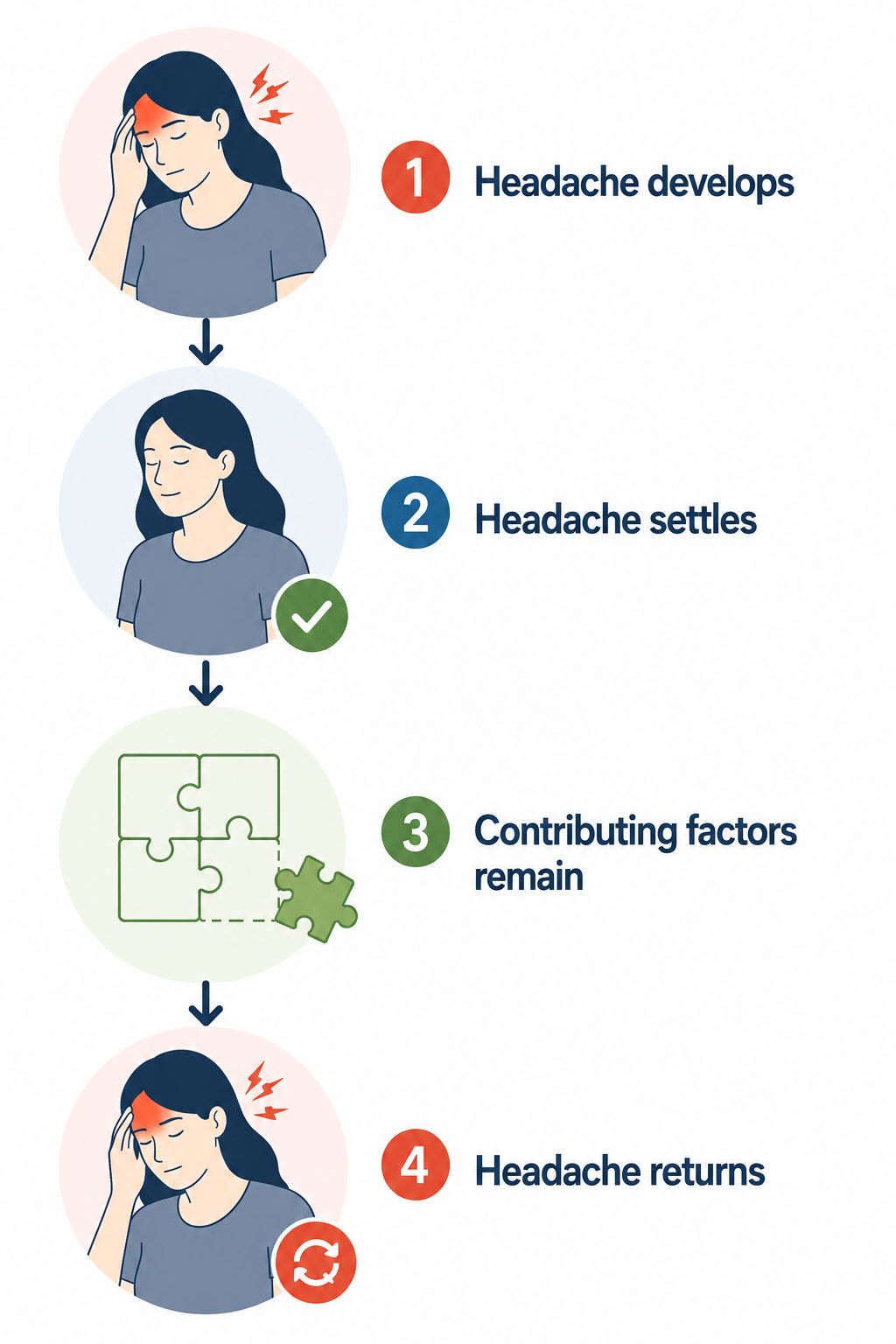
Recurring headaches may be influenced by factors such as:
- persistent neck stiffness
- reduced neck movement
- previous neck injury
- muscle tension or guarding
- reduced tolerance to prolonged postures
- work or lifestyle demands
- sleep and recovery
- stress
- jaw tension
- migraine susceptibility
The goal isn’t simply to ask, “How do we stop today’s headache?”
It can also be useful to ask:
“Why does this keep happening?”
Learn More About Why Pain Persists
How We Assess Headaches
Because headaches can have many different causes, your assessment begins with understanding the pattern of your symptoms.
We may look at:
Your Headache History
When your headaches began, where you feel them, how often they occur, how long they last and what seems to trigger or relieve them.
Your Neck
Movement, stiffness, tenderness and whether particular areas reproduce or influence your familiar headache.
Muscle and Joint Function
How the muscles and joints of your neck and upper back are functioning.
Posture and Movement
Whether sustained positions or particular movement patterns appear relevant.
Previous Injuries
Including previous neck injuries, sporting injuries or whiplash.
Other Possible Causes
Importantly, we also consider whether your symptoms suggest that your headaches may require medical investigation or another form of care.
Assessment comes before treatment.
Our first job is to understand your headache and determine whether chiropractic care is appropriate.
Not Every Headache Should Be Treated as a Neck Problem
Most headaches are not caused by serious disease, but occasionally headaches can be a sign of a condition requiring medical investigation.
If your history or examination identifies something concerning, we may recommend further assessment, imaging or referral to your GP or another healthcare provider.
This is one reason a careful history and examination are important – particularly if your headache is new, unusual, rapidly changing or significantly different from headaches you have experienced previously.
Chiropractic Care for Headaches
If your assessment suggests that your neck or surrounding musculoskeletal system is contributing to your headaches, we can discuss whether chiropractic care may be appropriate.
Depending on your individual findings, management may include:
- manual therapy
- chiropractic joint mobilisation or manipulation
- soft-tissue techniques
- exercises
- mobility work
- advice about posture or work positions
- strategies to improve your neck’s capacity to tolerate everyday demands
- appropriate self-management
Treatment recommendations should depend on what we find during your assessment, rather than simply treating everyone with headaches in the same way.
More Than Just Treating Where It Hurts
When headaches keep returning, repeatedly treating the painful area without understanding the broader problem may only provide temporary relief.
Our approach is to understand:
What type of headache are you experiencing?
Is your neck contributing?
What factors may be making the problem persist or return?
What can we do to improve those factors?
The aim is not just symptom relief, but helping you better understand and manage the problem over time.
A Thoughtful, Thorough Approach to Your Care
When you’re in pain — particularly if the problem has been present for a long time or previous treatment hasn’t helped — you want more than a quick examination and a generic treatment plan.
Our approach is built around understanding your individual situation.
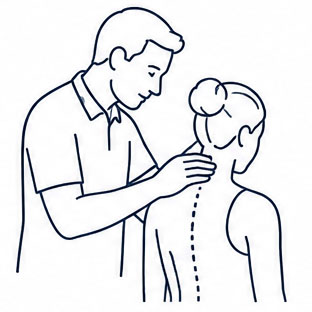
Thorough Assessment
Understanding the problem comes before treating it.
We take the time to investigate your symptoms, movement and function before making recommendations.
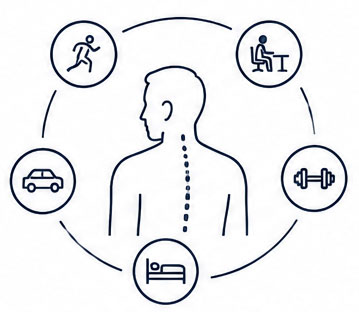
Complex Cases Welcome
Not every problem is straightforward.
Many people who come to us have experienced persistent or recurring problems, sometimes despite trying several different approaches.

Experienced Care
More than 25 years in practice.
Dr Richard Mathers has been helping Adelaide adults and families since 1999.
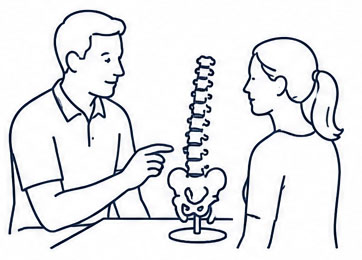
Clear Explanations
You should understand what’s happening with your body.
We explain what we find, what we think it means and the options available to you — in language that makes sense.
Individualised Care
Your care should fit you.
There are no pre-set treatment plans. Recommendations are based on your individual findings, circumstances and goals.
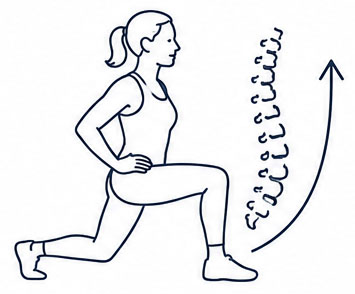
Self-Care Matters
What you do matters too.
Where appropriate, we help you understand the exercises, movement strategies and lifestyle factors that may help you manage your problem and build greater resilience over time.
Recurring Headaches? Your Neck May Be Worth Assessing.
If you experience recurring headaches – particularly headaches associated with neck pain, stiffness, posture or restricted movement – a chiropractic assessment can help determine whether your neck may be contributing.
Related Conditions
- Back Pain
- Neck Pain
- Sciatica & Disc Bulges
- Hip & Pelvic Pain
- Pins & Needles