
Why Does Pain Keep Coming Back?
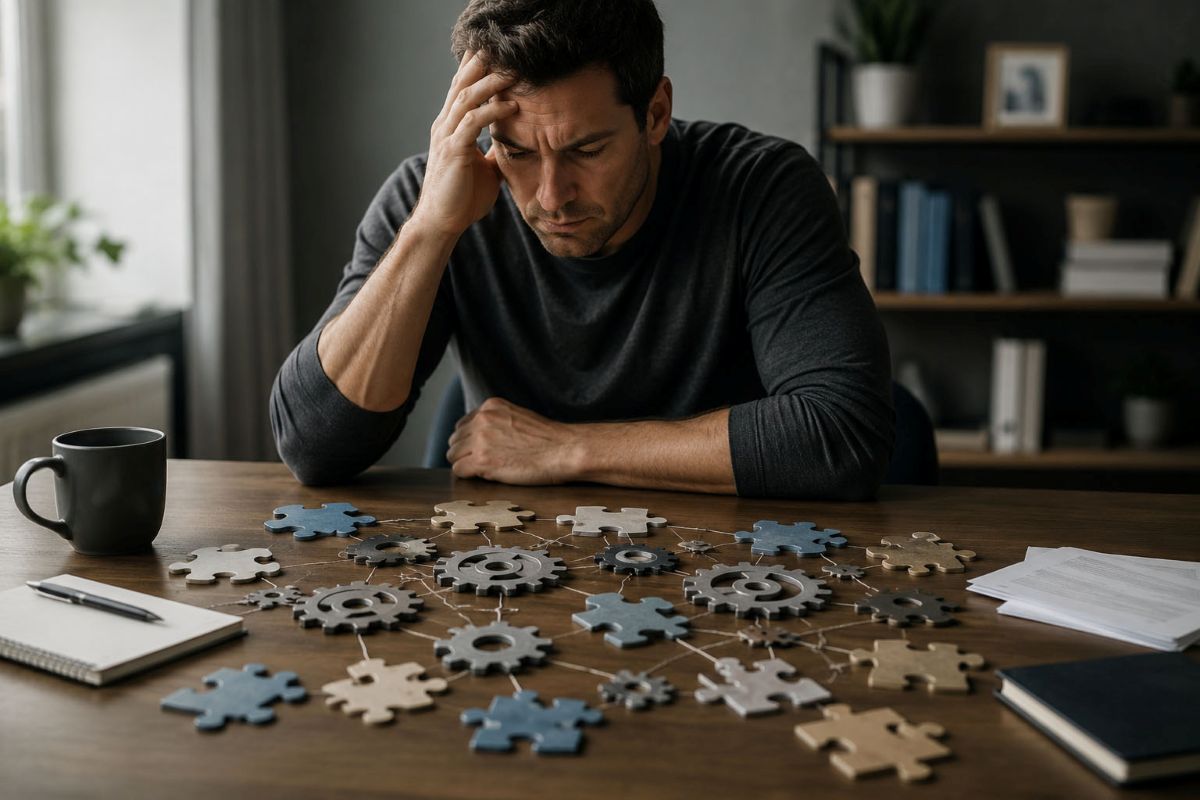
Many people don’t just want temporary pain relief – they want to understand why the problem hasn’t settled.
Pain often persists because multiple factors combine over time. Understanding those factors is often the first step towards making lasting progress.
Pain Isn’t Always About Damage
Many people assume that ongoing pain must mean something is badly damaged.
In reality, modern research has shown that pain is much more complex.
Sometimes pain settles quickly.
Sometimes tissues heal but pain continues.
Sometimes scans look terrible while people have very little pain.
Sometimes scans look almost normal despite significant symptoms.
Pain is the result of your nervous system processing information from many different sources—not simply a measure of tissue damage.
Understanding this difference helps explain why persistent pain can sometimes feel confusing.
Pain is real.
Understanding pain as a complex process doesn’t mean “it’s all in your head.”
It means your body, nervous system and brain are working together to protect you.
Sometimes that protective system simply becomes overprotective.
Why Pain Persists
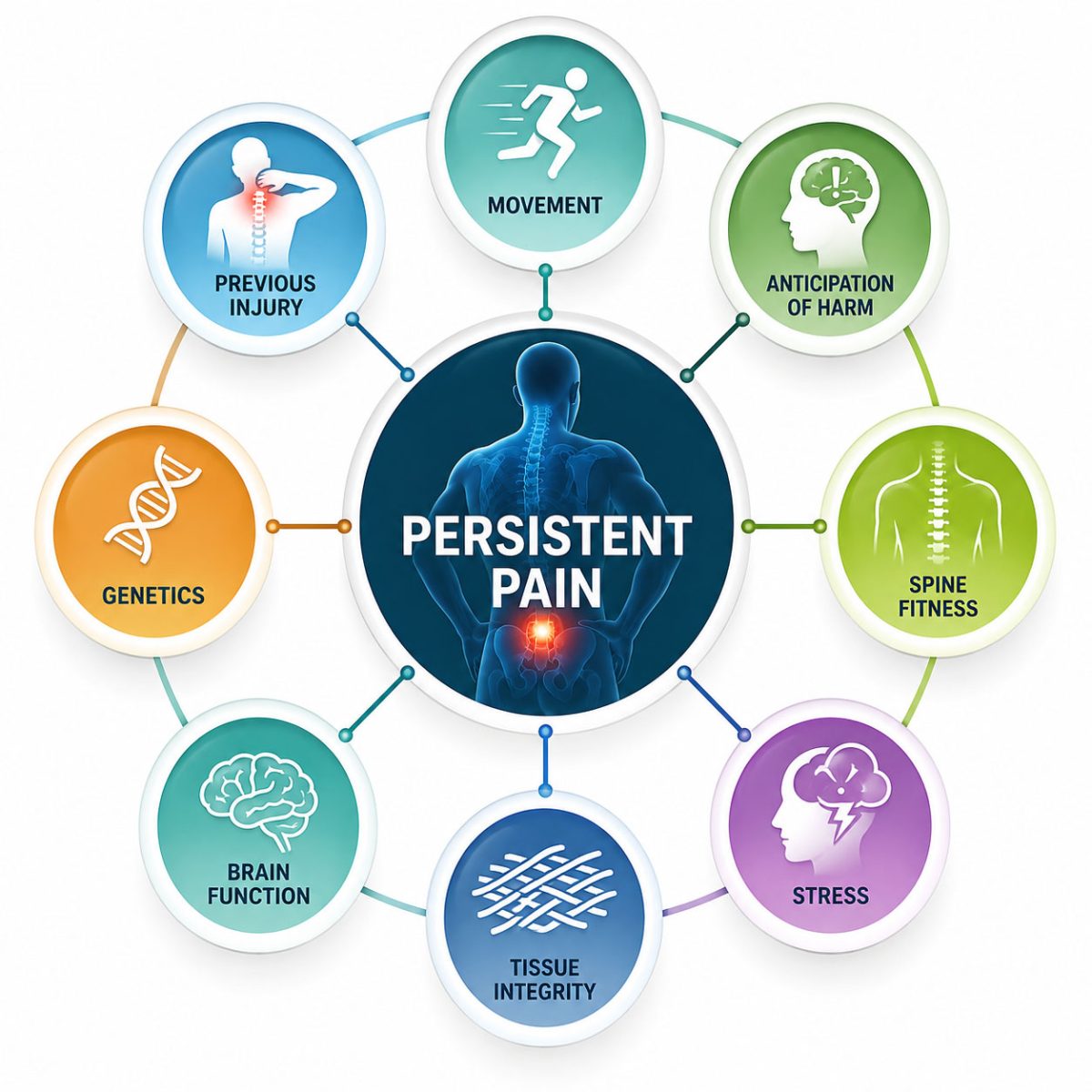
Every person has a different combination.
Finding the most important contributors is one of the goals of a thorough assessment.
Your Body Is Always Adapting
Our bodies are remarkably adaptable.
When something becomes irritated, painful or injured, your nervous system automatically changes how you move.
This is often helpful in the short term.
You protect the painful area.
You stiffen certain muscles.
You avoid movements that hurt.
This protective response is completely normal.
The challenge is that sometimes these protective patterns remain long after they are needed.
When that happens, movement may become less efficient, muscles can become less coordinated, and some areas may gradually become less resilient.
Understanding whether this has happened is an important part of our assessment.
The Vicious Cycle That Can Develop
Many people don’t become less active because they’re lazy.
They become less active because moving hurts.
Unfortunately, over time this can reduce strength, endurance, confidence and resilience.
Breaking this cycle is often one of the keys to recovery.
Pain Relief Isn’t Always The Same As Recovery
Pain often improves before the body has fully regained its previous capacity.
For some people this isn’t a problem.
For others—particularly those with physically demanding jobs, sport or recurring episodes—it may explain why symptoms return so easily.
One goal of care may be helping you rebuild that buffer.
Every Person Has A Different Story
Two people can have identical MRI scans.
One has severe pain.
One has none.
Likewise, two people with similar symptoms may need completely different management strategies.
That’s why we don’t believe in simply matching symptoms to treatments.
Instead, we work to understand:
- how your problem developed
- what may be maintaining it
- what factors are most changeable
- what options are most appropriate for you
Many people don’t become less active because they’re lazy.
They become less active because moving hurts.
Unfortunately, over time this can reduce strength, endurance, confidence and resilience.
Breaking this cycle is often one of the keys to recovery.
What We Look For During Your Assessment
– Movement
How your spine and body move together.
– Muscle Control
Whether your nervous system may still be protecting certain areas.
– Lifestyle Factors
Work, sleep, activity levels, previous injuries, stress and other influences.
– General Health
Medical history, fitness, recovery capacity and anything else that may influence symptoms.
– Goals
- What matters most to you.
- Pain relief?
- Sport?
- Gardening?
- Playing with grandchildren?
- Sleeping comfortably?
– Clinical Findings
Bringing everything together to explain what we think is happening.
What Happens Next?
Not everyone needs ongoing care.
Some people only require reassurance.
Some benefit from exercises.
Some improve with manual care.
Some require referral for further investigation.
Some simply need better understanding and confidence to move again.
Our role is to explain your options clearly so you can make informed decisions.
FAQ
If my scan shows arthritis, is that causing my pain?
Sometimes yes. Sometimes only partly. Many people have age-related changes without symptoms.
If nothing serious is damaged, why does it hurt so much?
Pain reflects how your nervous system protects you, not simply how much tissue damage exists.
Can pain become a habit?
Protective movement patterns can become persistent. Fortunately, they can often change again with the right combination of education, movement and appropriate care.
Will you tell me exactly what's causing my pain?
Sometimes the answer is very clear.
Sometimes several factors contribute.
Our goal is to identify the factors most likely to be important in your individual situation.
Does everyone need ongoing chiropractic care?
No.
Recommendations depend on your goals, findings and how you respond.
Understanding Comes Before Good Decisions
Whether your pain started last week or has been frustrating you for years, a thorough assessment can help identify the factors that may be contributing and explain your management options.