
Sciatica: Pain, Tingling or Numbness Down the Leg
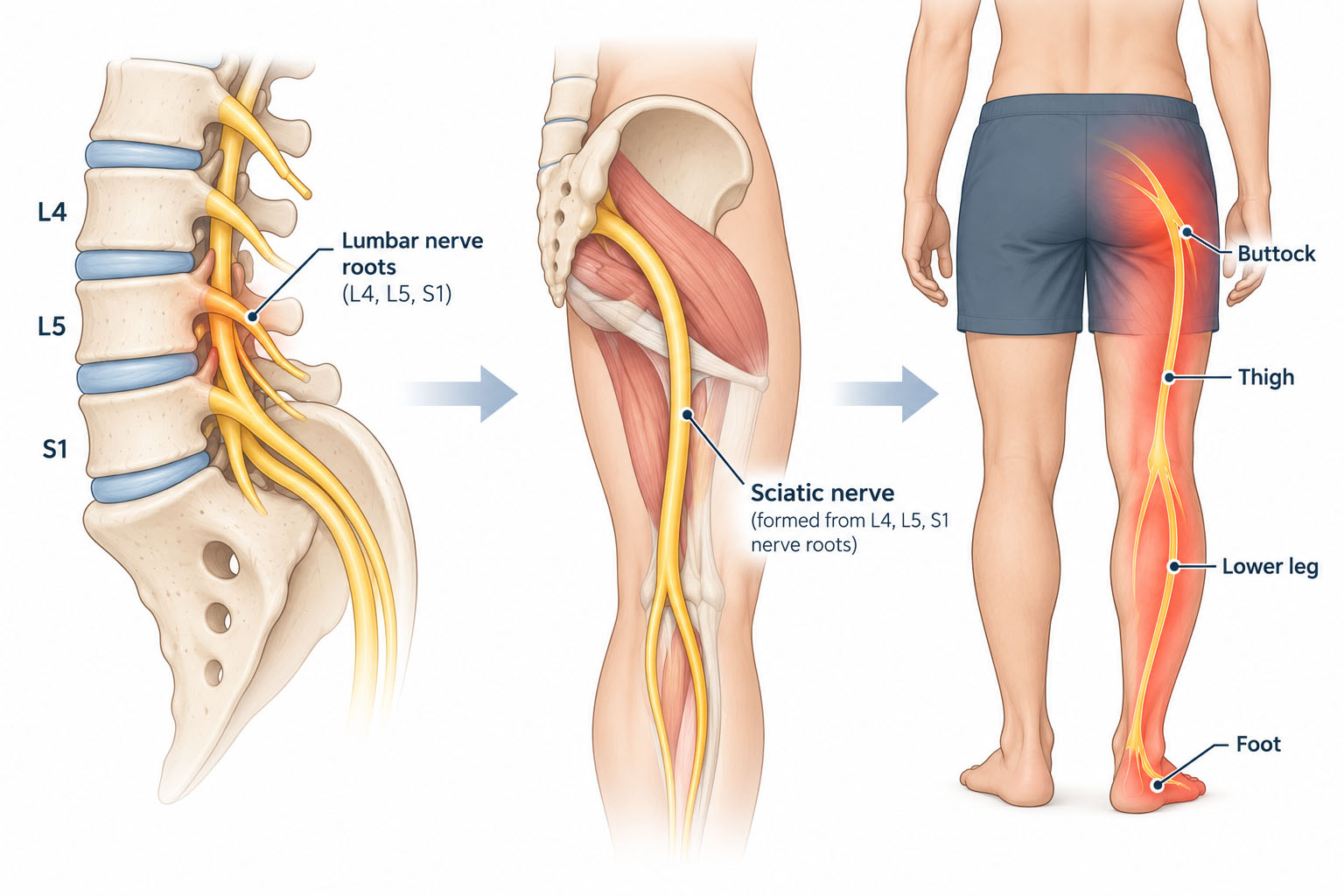
Sciatica occurs when a nerve in the lower back becomes irritated or compressed, causing symptoms that can travel into the buttock, thigh, lower leg or foot. At Sure Start Chiropractic, we focus first on understanding why the nerve is irritated and what factors may be contributing to the problem.
Sciatica Is Nerve-Related Leg Pain
Sciatica describes symptoms caused by irritation or compression of one or more of the nerve roots that eventually contribute to the sciatic nerve.
These nerves originate in the lower spine and travel through the pelvis and into the leg. When affected, symptoms may be felt anywhere along their pathway.
Sciatica can cause:
- Pain in the lower back, buttock or leg
- Sharp, shooting, burning or electric-like pain
- Pins and needles or tingling
- Numbness or altered sensation
- Weakness in part of the leg or foot
- Symptoms that worsen with certain movements, positions, coughing or sneezing
Some people experience significant back pain as well as leg symptoms. Others have surprisingly little back pain, with most of their symptoms occurring further down the leg.
Not all pain that travels down the leg is sciatica.
Muscles, joints and other structures in the lower back, pelvis and hip can also produce referred pain into the buttock or leg. A careful assessment helps distinguish true nerve-root symptoms from other causes of leg pain.
Sciatica Can Feel Different From Person to Person
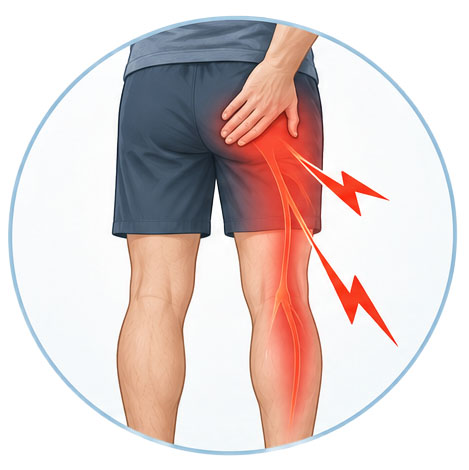
Shooting Leg Pain
Sharp or electric-like pain that travels from the lower back or buttock into the leg.
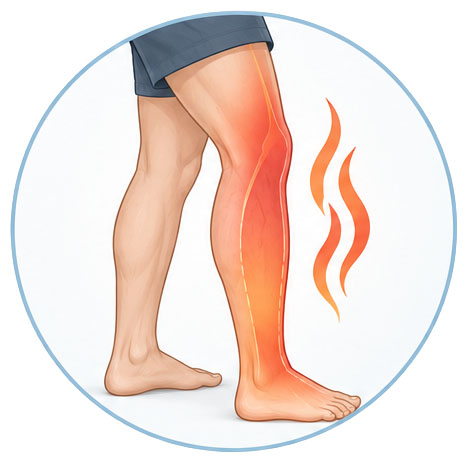
Burning Pain
A hot or burning sensation along part of the thigh, calf or foot.
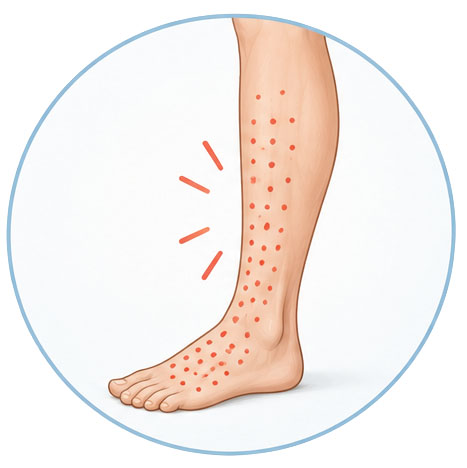
Pins & Needles
Tingling, prickling or unusual sensations in the leg or foot.
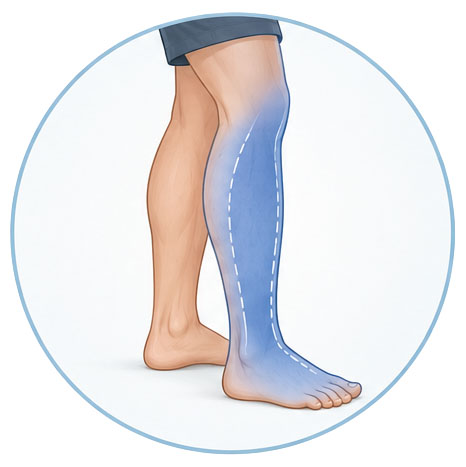
Numbness
Reduced or altered sensation affecting part of the leg, ankle or foot.
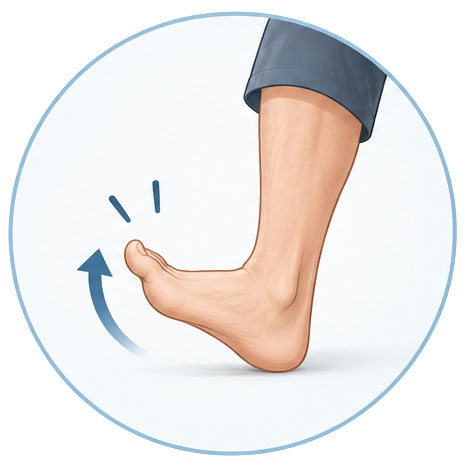
Leg or Foot Weakness
Difficulty with movements such as lifting the foot, pushing through the toes or climbing stairs.
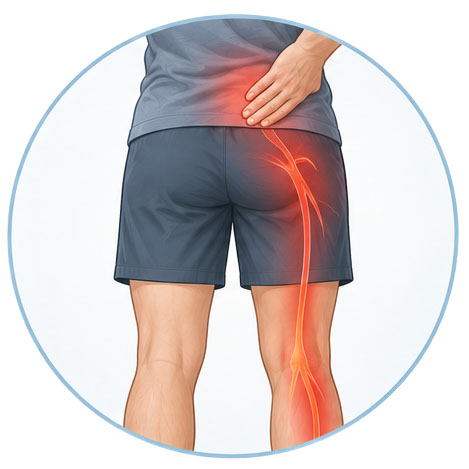
Back and Leg Pain
Lower back pain occurring together with symptoms extending into the buttock or leg.
Sciatica Is a Symptom – The Important Question Is Why
Disc Irritation or Disc Herniation
The discs between the vertebrae can bulge, protrude or become inflamed. In some cases this affects a nearby nerve root.
Importantly, a disc abnormality on a scan does not automatically mean it is responsible for someone’s symptoms. Imaging findings need to be considered alongside the person’s history and physical examination.
Age-Related Changes and Foraminal Narrowing
The openings through which spinal nerves leave the spine can become narrower due to changes involving the discs, joints and surrounding tissues.
This is more common with increasing age.
Spinal Stenosis
Narrowing within the spinal canal can reduce the space available for the nerves. Symptoms may be particularly noticeable during prolonged standing or walking and improve when sitting or bending forward.
Spondylolisthesis
One vertebra can shift relative to the vertebra below it. Depending on its severity and location, this can sometimes contribute to narrowing around the nerves.
Inflammation Around a Nerve Root
Nerve symptoms are not simply about physical “pinching”. Chemical irritation and inflammation around a nerve root can also contribute to pain and increased nerve sensitivity.
Other Causes
Less commonly, symptoms resembling sciatica can result from conditions outside the lumbar spine. This is one reason assessment and appropriate referral are important when the presentation doesn’t fit a typical pattern.
Leg Pain Can Come From Several Different Sources
A. True Sciatica / Nerve-Root Pain
Symptoms may include:
- Pain travelling below the knee
- Tingling or numbness
- Changes in sensation
- Muscle weakness
- Changes in reflexes
- Symptoms reproduced by tests that place tension on the affected nerve
B. Referred Pain
Pain from structures in the lower back, pelvis or hip can also spread into the buttock or thigh without significant nerve-root involvement.
This can sometimes feel remarkably similar to sciatica.
Why the Difference Matters
The most useful treatment approach depends on what is actually producing the symptoms.
Simply treating every person with leg pain as though they have a “trapped sciatic nerve” can overlook important differences between conditions.
At Sure Start Chiropractic, assessment is aimed at determining:
- Where are the symptoms coming from?
- Is a nerve actually involved?
- How well is the nerve functioning?
- What appears to be aggravating it?
- And what can reasonably be changed?
Settling the Pain and Addressing the Problem Aren’t Always the Same Thing
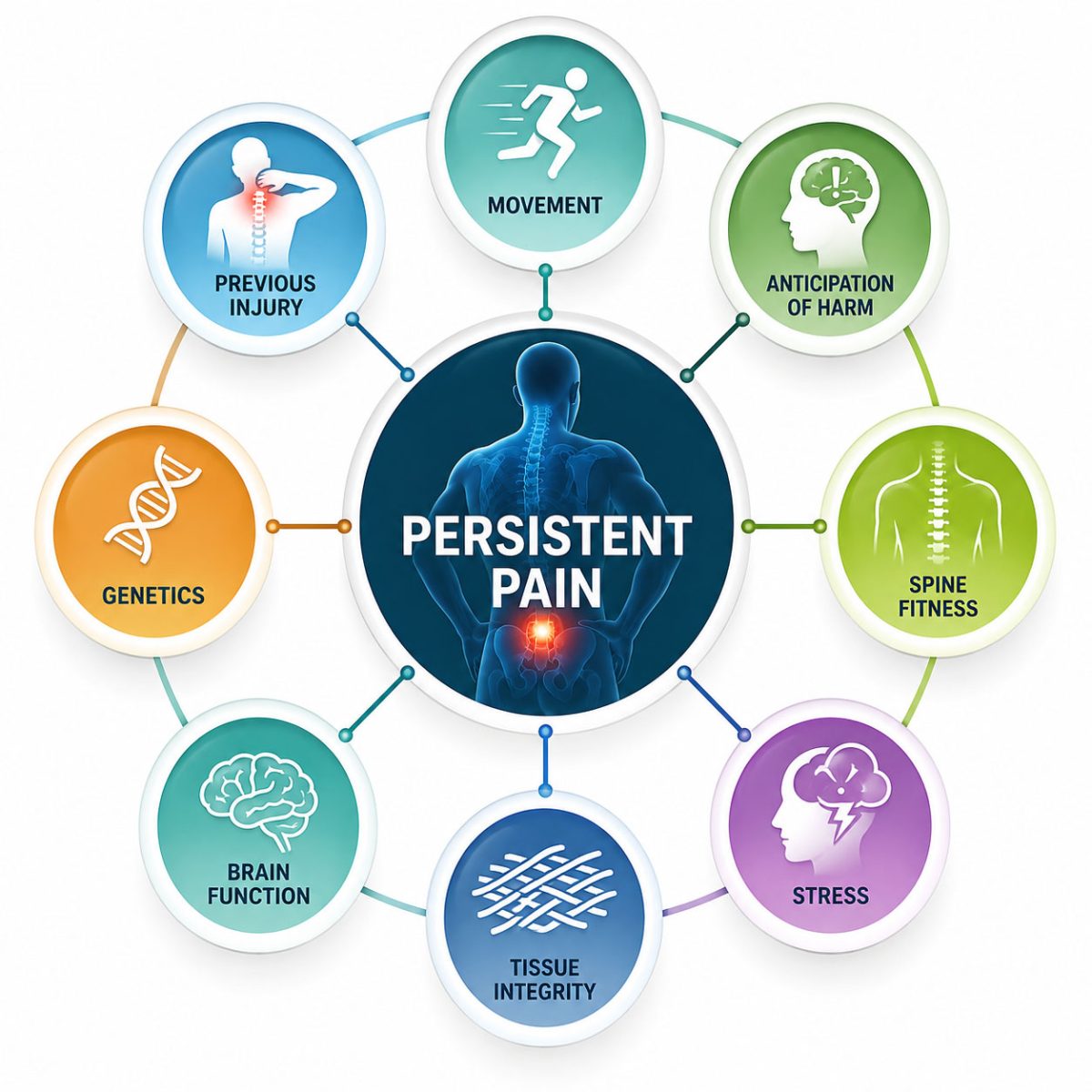
Sciatica often improves, but recurrence can occur. In some people there isn’t one single reason. Several factors may influence how much load and irritation the lower back and nerve can tolerate.
Previous Episodes or Injury
A history of recurrent lower back problems can influence how the area responds to future loading.
Reduced Movement Capacity
Pain can cause people to move differently, become guarded or avoid certain movements.
Strength and Physical Capacity
If the demands placed on the back repeatedly exceed its current capacity, symptoms may be more likely to return.
Work and Daily Loading
Repeated lifting, prolonged sitting, bending or physically demanding work may contribute in some cases.
Recovery and Lifestyle Factors
Sleep, activity levels, stress and general health can influence pain sensitivity and recovery.
Structural Factors
Disc changes, arthritis, spinal narrowing and other anatomical factors may contribute to some people’s symptoms.
Good Care Starts With Understanding What Is Happening
At your first visit, the priority is to determine whether your symptoms are consistent with sciatica, what may be causing the nerve irritation, and whether chiropractic care is appropriate.
Your assessment may include:

Understanding Your Symptoms
We discuss where your symptoms started, where they travel, what they feel like and what makes them better or worse.
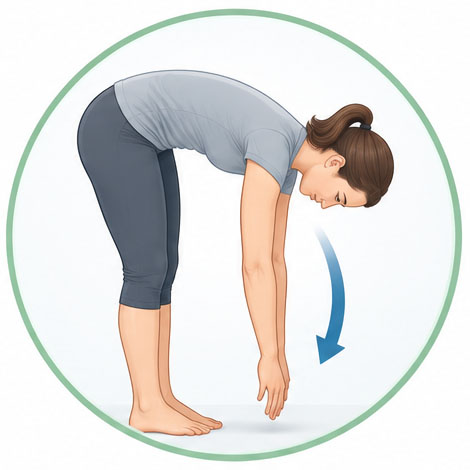
Lower Back and Movement Assessment
We assess movement of the lower back and surrounding areas and look for movements or positions that reproduce or relieve your symptoms.
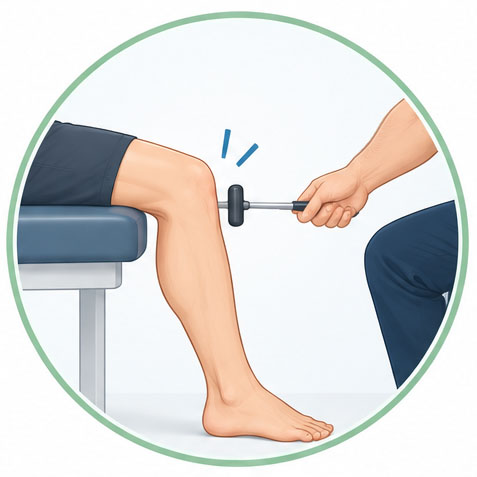
Neurological Examination
Where appropriate, we may assess:
- Muscle strength
- Reflexes
- Skin sensation
- Nerve tension
- Changes between the two legs
This is particularly important when numbness, tingling or weakness is present.
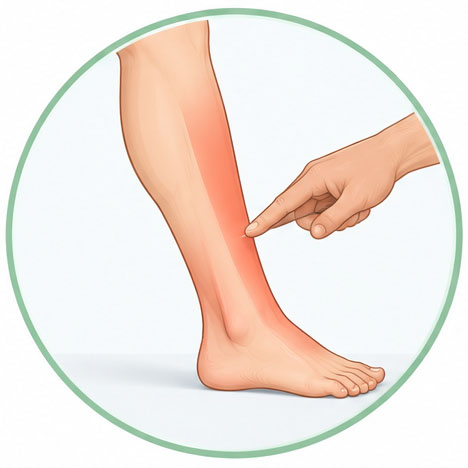
Functional Assessment
We may look at movements relevant to your everyday problem — such as sitting, bending, walking, lifting or getting up from a chair.
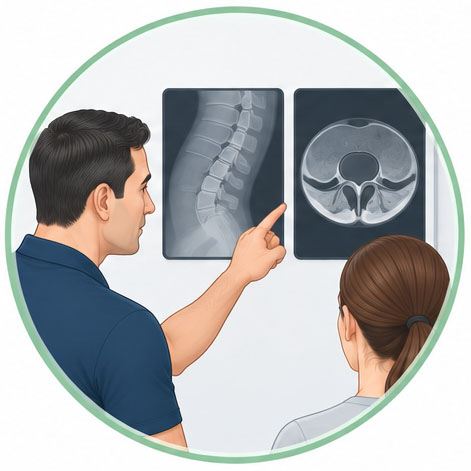
Determining Whether Further Investigation Is Needed
Most people with sciatica don’t automatically require imaging. However, X-rays, MRI, medical assessment or other investigations may be appropriate in some situations.
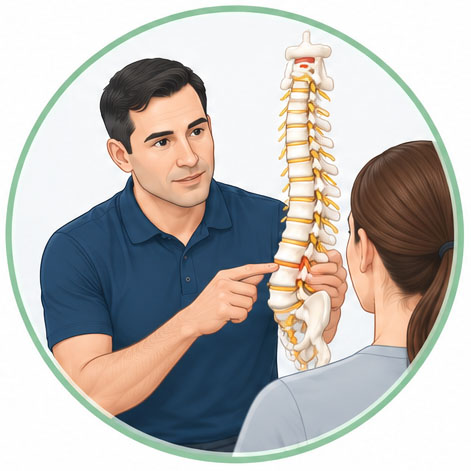
Explaining What We Find
We want you to leave with a clearer understanding of what appears to be happening, what your options are and what you can do to help yourself.
How We May Help
If your assessment indicates that chiropractic care is appropriate, your management plan will depend on your individual presentation.
Care may involve a combination of:
Hands-On Care
Treatment may be used to help improve movement, reduce pain and make it easier to return to normal activity.
Movement and Exercise
Specific exercises may be recommended to restore movement, gradually improve strength and increase your back’s capacity.
Advice About Activity
Complete rest is rarely the long-term answer. We can help you identify which activities are reasonable to continue, which may need temporary modification and how to progressively return to normal activity.
Understanding Your Symptoms
Nerve pain can be frightening, particularly when it travels a long way down the leg. Understanding what is happening and knowing what to look out for can make the problem easier to manage.
Longer-Term Spine Health
Once symptoms settle, some people choose to work on strength, movement, habits and other factors that may improve their ability to tolerate everyday demands.
Self-Care Is an Important Part of Recovery
For many people, recovery isn’t simply about receiving treatment. What happens between appointments matters too.
Depending on the cause and severity of your symptoms, useful strategies may include:
- Remaining reasonably active rather than prolonged bed rest
- Temporarily modifying movements that significantly aggravate symptoms
- Regular walking where tolerated
- Changing position regularly during prolonged sitting
- Gradually rebuilding normal movement
- Appropriate mobility or strengthening exercises
- Gradually returning to work, exercise and normal activities
There isn’t one “best sciatica exercise” for everyone.
An exercise that helps one type of sciatica may aggravate another, which is why we prefer to base exercise advice on what we find during your assessment.
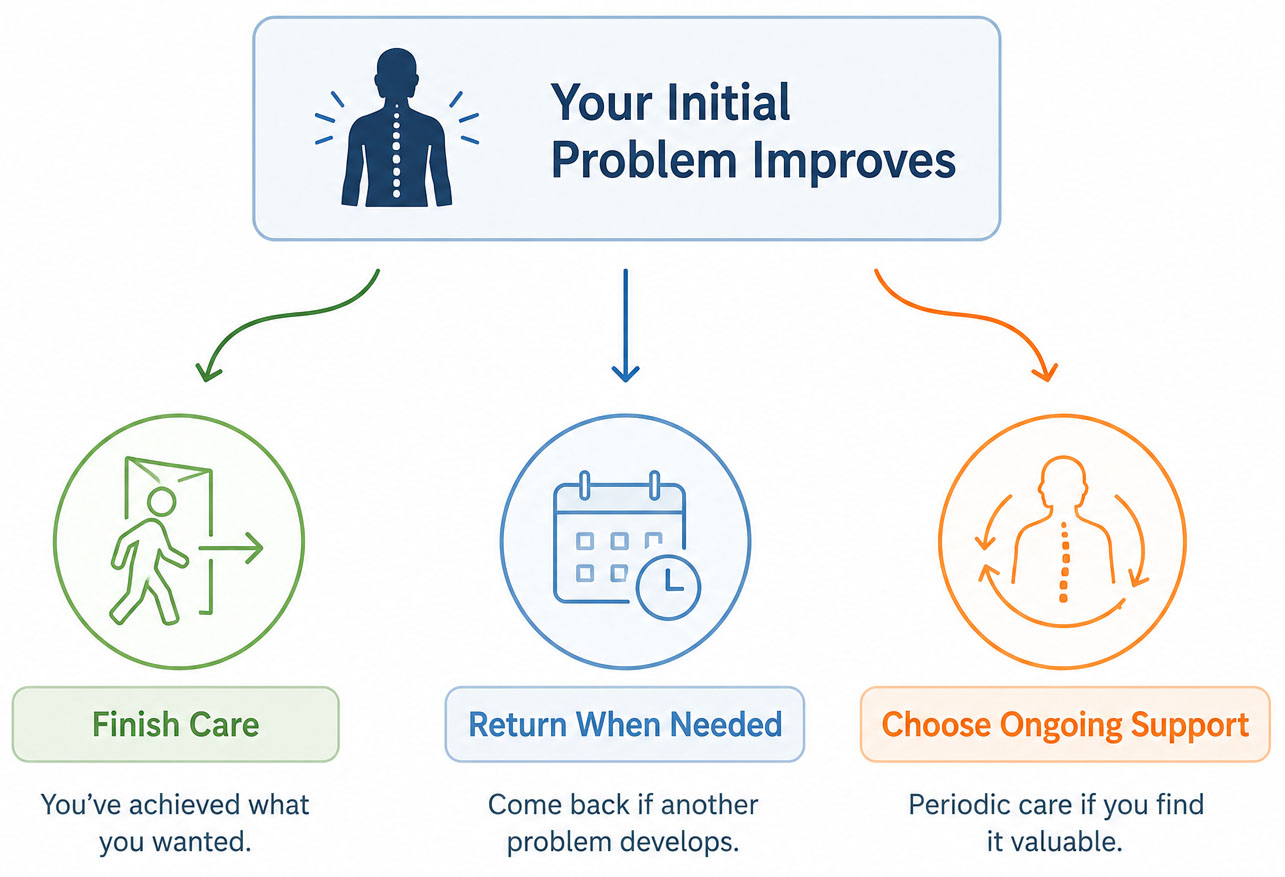
Getting Better Is Only Part of the Conversation
Once you’re feeling better, we’ll discuss your options.
Finish Care
If you’re comfortable, functioning normally and happy with your progress, you may decide that no further care is required.
Return If You Need Us
Some patients prefer to finish care and return if the problem recurs.
Work on Longer-Term Spine Health
Others choose occasional professional care combined with exercise and self-care to help maintain movement, capacity and confidence.
The choice is yours. Our role is to explain your options and make recommendations based on what we find — not to lock you into a predetermined treatment schedule.
Frequently Asked Questions
Is sciatica caused by a slipped disc?
A disc problem is one possible cause of sciatica, but it isn’t the only one. Disc protrusions, age-related narrowing, spinal stenosis and other conditions can all affect spinal nerves.
Does sciatica always cause back pain?
No. Some people experience both back and leg pain, while others have predominantly buttock or leg symptoms.
Can sciatica cause numbness or weakness?
Yes. Because sciatica involves a nerve, it can sometimes affect sensation or muscle strength as well as causing pain.
Do I need an MRI for sciatica?
Not necessarily. Many cases can initially be assessed clinically without imaging. MRI may be recommended when the findings suggest it would meaningfully influence diagnosis or management.
Should I rest if I have sciatica?
A short period of modifying aggravating activities may sometimes help, but prolonged bed rest is generally not desirable. The appropriate amount and type of activity depends on the severity and cause of your symptoms.
How long does sciatica take to improve?
Recovery varies considerably. The cause, severity of nerve irritation, duration of symptoms, neurological involvement and individual circumstances can all influence recovery.
Can chiropractic treatment help sciatica?
Some people with sciatica may be suitable for conservative care like chiropractic that includes manual therapy, exercise, activity advice and self-management. The first step is determining what appears to be causing your symptoms and whether chiropractic care is appropriate for you.
When should I be concerned about sciatica?
Progressive weakness, bladder or bowel changes, saddle-area numbness or severe symptoms affecting both legs require prompt medical assessment.
Not Sure If Your Leg Pain Is Sciatica?
Pain, tingling or numbness travelling down your leg can have several possible causes.
A thorough assessment can help determine whether a nerve is involved, where your symptoms appear to be coming from, and what your next steps should be.
Sure Start Chiropractic — Kingswood, serving Mitcham and surrounding Adelaide suburbs.