
Knowing what’s been found, why it matters, and how it relates to your goals helps you make informed decisions and track your own progress.
At Sure Start Chiropractic we have access to a large array of assessment methods but the 3 we use the most, and the ones we think you should get to know, are:
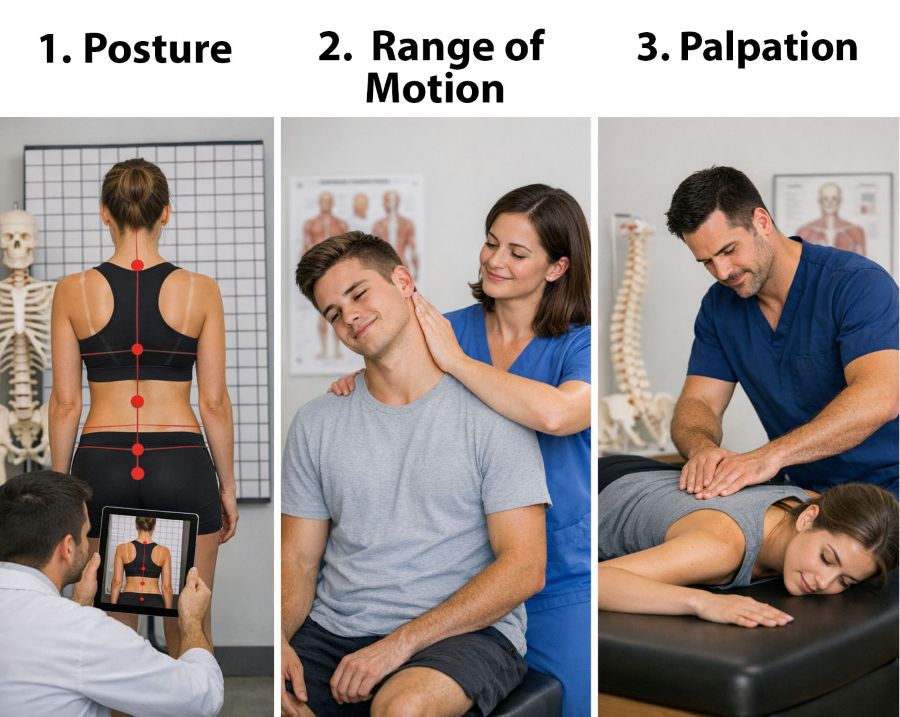
1. Posture
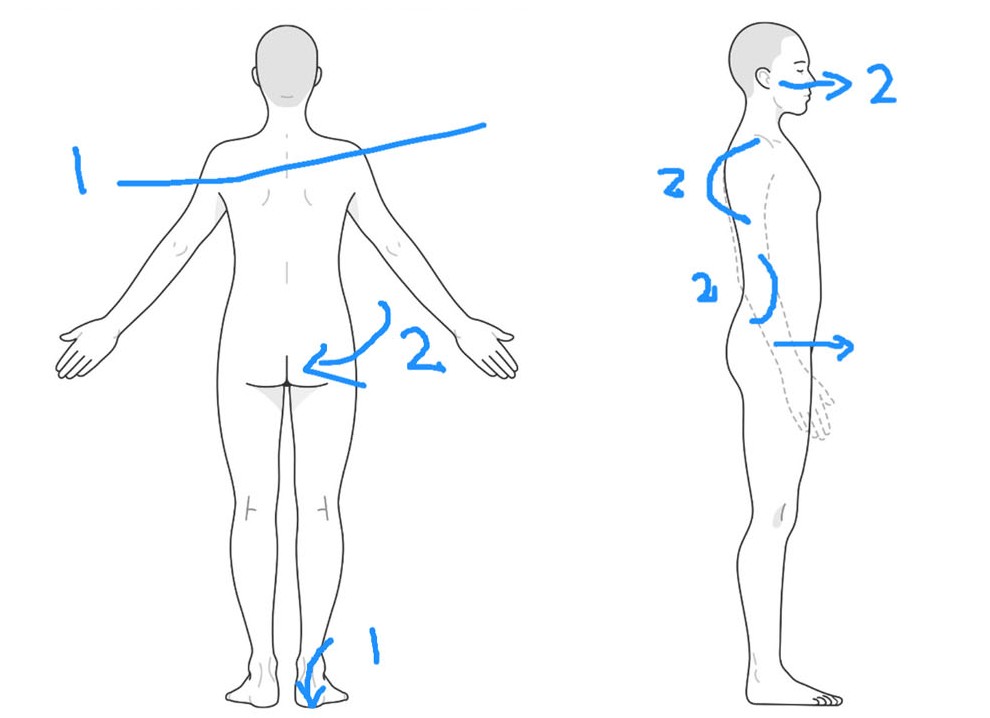
Richard will typically record any ‘distortions’ by drawing them on a chart and grading each one by severity:
- 1 = Mild
- 2 = Moderate
- 3 = Severe
The chart that follows shows 5-6 postural distortions, ranging in severity from ‘mild’ to ‘moderate’.
Total score in this case is 1+2+1+2+2+2 = 10
The Ideal postural score is 0
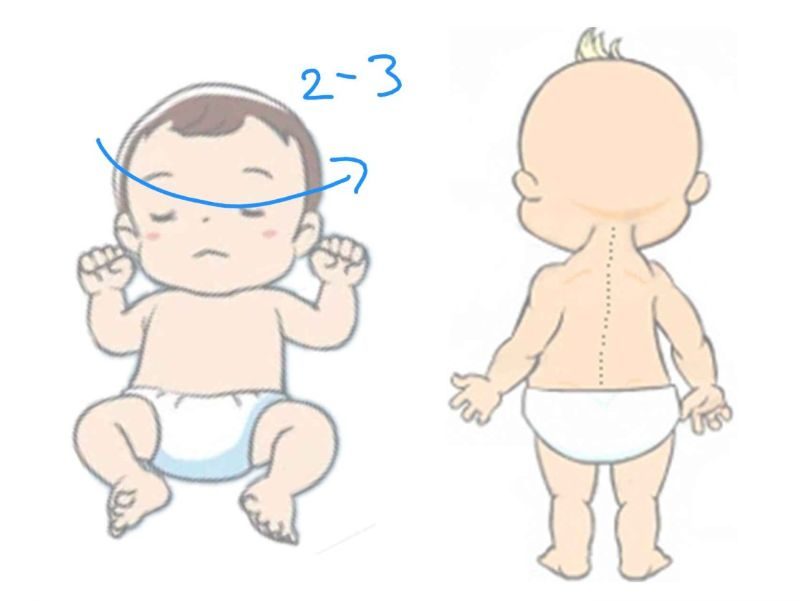
This next posture chart example shows an infant with a moderate-severe left head-turn preference.
Total score: 2.5
2. Range of Motion
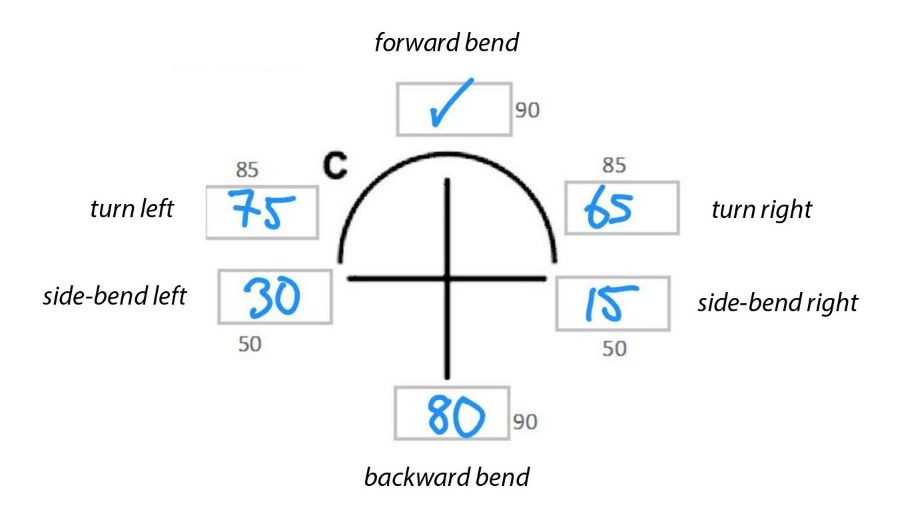
The six main movement direction of the spine – forward bend, backward bend, side-bend and rotation are noted on a chart like the one shown here.
This example shows a neck with good forward bend (tick = full range) and quite good backward bend (80 degrees, of an ideal 90), but limited turning and side-bend, especially to the right (65/85 and 15/50).
Key:
- An ‘ideal’ range is given in small font next to each box as a guide.
- Most movements are recorded in degrees, but sometimes as a %.
- C= Neck (cervical) spine
- T/L = Thoraco-lumbar (mid & lower) spine
3. Palpation
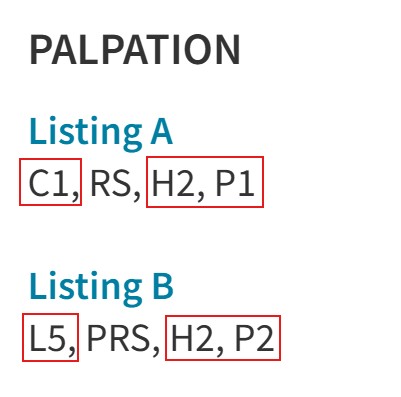
A healthy spine segment typically has a ‘soft’ and ‘comfortable’ end-range feel when palpated locally by your Chiropractor’s hand. In contrast, an inactive segment will commonly have a ‘harder’ and sometimes ‘tender’ end-range feel.
The adjacent palpation example shows:
- C1 (the 1st neck vertebra), to have a ‘hardness’ score of 2 (moderate) and a ‘pain/tenderness’ sore of 1 (mild).
- L5 (5 lumbar vertebra) to have ‘hardness’ score of 2 (moderate) and tenderness score of 2 (moderate).
Total score in this case = 2+1+2+2 = 7
Ideal palpation score is = 0
Questions?
If you have any questions about your exam findings or wish to learn more about the additional ways to assess your spine health, like those shown below, don’t hesitate to ask your Chiropractor on your next visit. If you are curious, other spine health measurements include:
- Neurological assessment
- Orthopaedic tests
- Functional Movement & Daily Performance
- Imaging (X-rays, MRI, CT scans)
- Muscle Strength & Stability