
Your spine is a complex structure involving joints, muscles, nerves, discs, and movement patterns. Because of this, there are many different ways to measure spine health, each with its own strengths and limitations.
Understanding these can help you make more informed decisions about your care.
At Sure Start Chiropractic, have access to a wide variety of assessment tyoes but the primary 3 we utilise are:

To help you understand your exam findings, please see some examples of Richards notes here
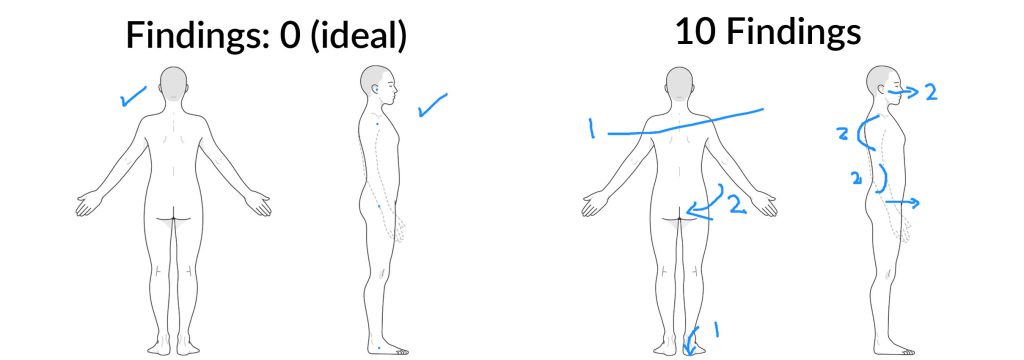
1. Posture
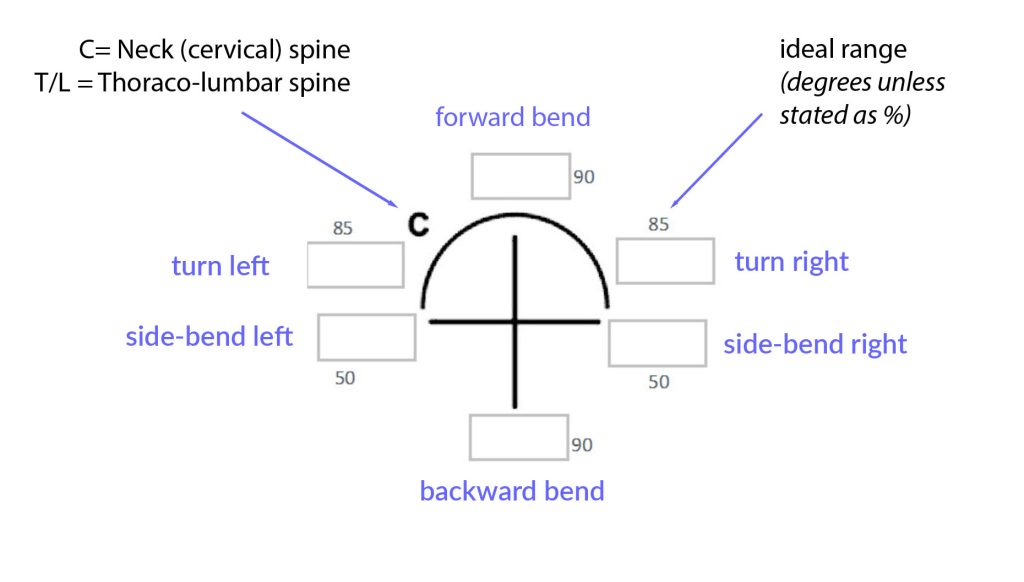
2. Flexibility (global motion)
Your spine is a complex structure involving joints, muscles, nerves, discs, and movement patterns. Because of this, there are many different ways to measure spine health, each with its own strengths and limitations.
Understanding these can help you make more informed decisions about your care.
1. Posture & Alignment
What it measures:
- Standing and sitting posture
- Spinal curves (e.g. forward head posture, rounded shoulders)
Strengths:
- Easy to observe
- Helps identify long-term mechanical stress patterns
- Useful for education and awareness
Limitations:
- Posture is dynamic, not static
- “Perfect posture” is not always necessary or realistic
- Weak correlation between posture and pain in some cases
👉 Key point: Posture gives clues—but it’s not the full story.
2. Range of Motion (Mobility)
What it measures:
- How well your spine moves in different directions
- Flexibility and joint function
Strengths:
- Objective and measurable
- Helps identify restricted or “stiff” areas
- Useful for tracking improvement over time
Limitations:
- Good mobility doesn’t always mean good stability or control
- Some people are “hypermobile” but still dysfunctional
- Doesn’t directly assess nervous system function
👉 Key point: Movement matters—but quality matters more than quantity.
3. Palpation (Hands-On Assessment)
What it measures:
- Joint movement
- Muscle tone and tension
- Areas of restriction or irritation
Strengths:
- Highly specific to individual joints and tissues
- Allows real-time assessment of function
- Guides hands-on care
Limitations:
- Practitioner-dependent (requires experience and skill)
- Some subjectivity involved
- Not a standalone measure of overall health
👉 Key point: This is where clinical experience really matters.
4. Neurological Function
What it measures:
- Reflexes
- Muscle strength
- Coordination
- Balance
- Nerve function
Strengths:
- Directly assesses how well the nervous system is working
- Can detect more serious issues
- Highly relevant to overall health and function
Limitations:
- Subtle dysfunction may not show up on basic tests
- Requires clinical expertise
- Often underappreciated by patients
👉 Key point: Your spine protects your nervous system—this is a critical measure.
5. Functional Movement & Daily Performance
What it measures:
- How your body performs in real-life activities
- Walking, bending, lifting, sport, or work tasks
Strengths:
- Highly relevant to everyday life
- Helps identify compensations and inefficiencies
- Focuses on what matters most to patients
Limitations:
- Can be influenced by fitness, strength, and habits
- Harder to standardise and measure precisely
👉 Key point: Function often matters more than symptoms.
6. Imaging (X-rays, MRI, CT scans)
What it measures:
- Structural changes (disc degeneration, arthritis, alignment)
Strengths:
- Provides detailed structural information
- Useful in specific cases (trauma, pathology, severe symptoms)
- Can guide clinical decisions when necessary
Limitations:
- Many “abnormalities” are found in pain-free people
- Poor correlation between imaging findings and pain
- Doesn’t show how the spine is functioning
- Overuse can lead to unnecessary concern
👉 Key point: Structure doesn’t always equal symptoms.
7. Muscle Strength & Stability
What it measures:
- Core strength
- Spinal support muscles
- Control during movement
Strengths:
- Important for injury prevention
- Supports long-term spine health
- Can be improved with targeted care
Limitations:
- Strength alone doesn’t guarantee good movement patterns
- Doesn’t assess joint or nerve function directly
👉 Key point: Strength supports the spine—but doesn’t define its health.
So… What’s the Best Way to Measure Spine Health?
The truth is:
👉 There is no single “best” measure.
Each method provides a different piece of the puzzle.
The most accurate understanding of your spine health comes from combining multiple assessments, including:
- How you feel
- How you move
- How your spine functions
- How your nervous system is working
Many people stop care as soon as their pain disappears.
But as you can see:
- Pain is just one indicator
- Dysfunction can still exist without symptoms
- True spine health involves function, resilience, and adaptability
This is why some people choose to:
- Stop care once symptoms improve
- Maintain their current level of health
- Or continue improving to build a stronger, more resilient spine
Final Thought
Your spine health exists on a spectrum—not a simple “pain vs no pain” scale.
The more thoroughly it is assessed, the better decisions you can make about your health, your care, and your long-term wellbeing.