
Ongoing Chiropractic Care: What Happens After Your Pain Improves?

Your symptoms have improved. Now what?
One of the most common questions patients ask is whether they should continue care once they’re feeling better.
The answer isn’t the same for everyone.
Our role is to explain your options, discuss the potential benefits and limitations of each approach, and help you choose what best fits your goals—not ours.
There Isn’t One “Correct” Answer
Your Care Should Match Your Goals
Some people simply want relief from today’s problem.
Others want to reduce the likelihood of the problem returning.
Others want ongoing support because they know their body is under regular physical stress.
All of these are reasonable goals.
Once we’ve reassessed your progress, we’ll discuss where things stand and what makes sense for you.
You’re always in control.
We don’t lock patients into contracts or long-term treatment plans.
We’ll explain what we think is reasonable based on your examination and progress, but the decision is always yours.
Three Common Paths After Recovery

Option 1 - Finish Care
Ideal if:
- Your symptoms have resolved
- Movement has returned to normal
- You’re comfortable managing independently
You leave knowing what to watch for and what to do if the problem ever returns.

Option 2 - Return If Needed
Some people simply come back if another episode develops.
For many conditions this works perfectly well.
We’ll explain what signs suggest it’s worth being reassessed sooner rather than later.

Option 3 - Choose Ongoing Care
Some patients choose periodic check-ups because they feel they move better, recover faster or like having someone monitor their spine over time.
Why Do Some Problems Keep Returning?
Many people have experienced this cycle:
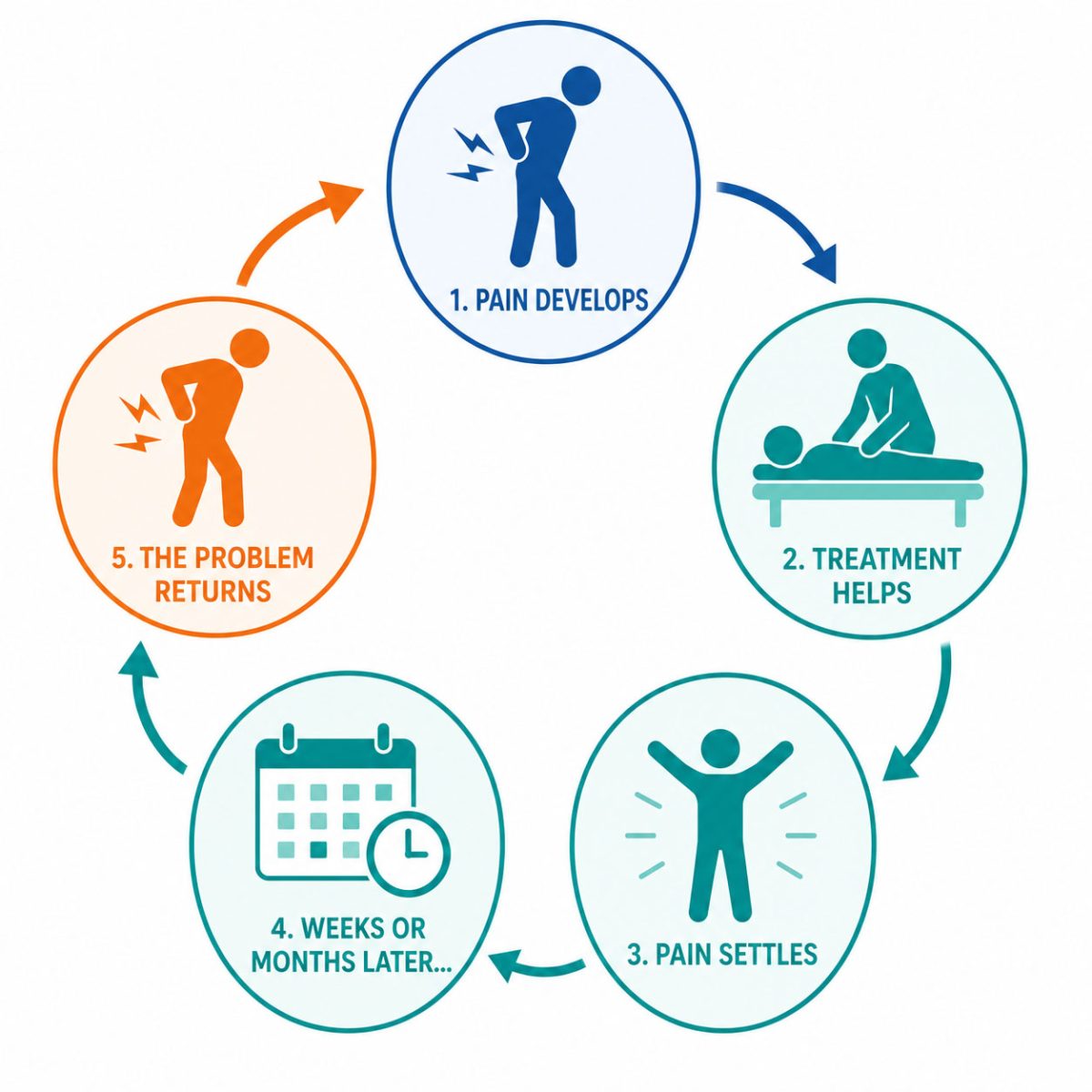
That doesn’t necessarily mean anything was “done wrong.”
Many factors can contribute, including:
- previous injuries
- ongoing physical stress
- reduced spinal fitness
- reduced movement
- sporting demands
- psychological stress
- prolonged sitting
- posture
- structural decay
- genetic factors
If you'd like to understand this in more detail, visit our page: ‘Why Pain Persists’
Feeling Better Isn’t Always the Same as Functioning Better
Pain often improves before the body has regained its best movement, strength or resilience.
Depending on your situation, ongoing improvement may involve:
Better movement
Helping joints move more freely.
Better muscle function
Improving coordination and control.
Better habits
Posture, lifting, exercise and daily movement.
Better resilience
Helping your body cope with everyday physical demands.
Rather than simply treating pain, our aim is to help you build confidence in your body’s ability to move and function well.
Who Commonly Chooses Ongoing Care?
Patients who often choose periodic care include people who:
- have physically demanding jobs
- spend long hours sitting
- have previously experienced recurring back pain
- play regular sport
- have ongoing spinal stiffness
- simply feel they function better with occasional check-ups
Importantly, many patients don’t choose ongoing care—and that’s perfectly okay too.
What Does Ongoing Care Usually Look Like?
Every patient is different.
Some people may choose:
- every few weeks
- every couple of months
- occasional reviews several times each year
There is no universal schedule.
If ongoing care seems appropriate, we’ll discuss what makes sense for your situation and you’re free to change your mind at any time.
Frequently Asked Questions
Will you tell me I need treatment forever?
No.
Recommendations are based on your examination findings, progress and goals.
Do I have to book ongoing care?
No.
You can stop care whenever you wish.
Is ongoing care evidence-based?
Some research suggests that periodic chiropractic care may reduce recurrence or help maintain improvements for certain people with recurrent spinal pain. However, the evidence varies depending on the condition and the individual.
We’ll discuss what the research says, what it doesn’t say, and help you decide what’s appropriate for you.
How do I know if ongoing care is worthwhile?
The best indicator is whether you continue to experience meaningful benefit.
If you no longer feel you’re receiving value, we’ll discuss other options.
We Measure Success By Helping You Reach Your Goals
Some patients need just a few visits.
Others benefit from a longer rehabilitation period.
Some choose occasional ongoing care.
Whatever you decide, our commitment is the same:
- Listen carefully
- Assess thoroughly
- Explain clearly
- Recommend honestly
- Respect your choices
That’s the approach we’ve followed for more than 25 years.
Ready to Discuss the Best Plan for You?
Whether you’re looking for short-term pain relief or longer-term support, we’ll help you understand your options so you can make an informed decision with confidence.